

Verdict: Real numbers, cherry-picked story
The four percentages are real Alinea Analytics estimates, but they are cherry-picked outliers. A representative PlayStation physical share is 15–22%, not 30–44%.
A viral post argues that physical games are not dying, because some PS5 games sell 30–40% or more of their copies on disc. It points to a “GamesRadar report” as its proof. That framing does not hold up. GamesRadar’s October 21 piece covered only Resident Evil Requiem. All four figures come from Alinea Analytics’ October 20 newsletter, and they are estimates for 2026 year-to-date — not official figures from Sony or Capcom.
The numbers themselves are worth checking one by one, because the viral version quietly changes what some of them measure.
Claim by claim
| Game | Viral claim | What the source actually said | Verdict |
|---|---|---|---|
| Resident Evil Requiem | Just over 30% physical | 30.2% of PlayStation revenue (1.3 million copies, $92.3 million), about 15% of all-platform revenue | ✓ Correct but mislabelled |
| Marvel’s Wolverine | Over 32% physical | 32.3% of revenue ($64.6 million), about 30.8% of copies (around 800,000 of 2.6 million) | ✓ Correct but mislabelled |
| Pragmata | Over 40% physical | 44.0% of copies, 43.5% of revenue (442,000 copies, $26.4 million) | ✓ Correct |
| Onimusha: Way of the Sword | Over 40% physical | Alinea: 44.1% of copies / 43.5% of revenue (423,000 copies, $30.2 million) — but Ampere / The Game Business put September alone at 30% | ? Conflicting data |
The Requiem and Wolverine cases show why the label matters. A revenue share is not a copy share, and presenting it simply as “% of PS5 sales” invites readers to assume it is.
The numbers in bars
Physical share of revenue — PlayStation, 2026 YTD (Alinea)
Resident Evil Requiem — 30.2%
Marvel’s Wolverine — 32.3%
Pragmata — 43.5%
Onimusha: Way of the Sword — 43.5%
EA Sports FC 27 — 8.9%
NBA 2K27 — 4.6%
Madden NFL 27 — 6.9%
Physical share of copies
Marvel’s Wolverine — ~30.8%
Pragmata — 44.0%
Onimusha: Way of the Sword — 44.1%
All PlayStation full games (Sony, Q1 FY2026) — 18% physical
That last bar is the point. Put the four headline games next to the platform as a whole, and they stop looking typical.
The conflicting numbers
A second dataset tells a different story, and it covers a different window. Ampere’s figures, reported by The Game Business, cover September — the launch month — only, not the full year to date.
- Marvel’s Wolverine: 35% of worldwide copies in September, 51% in Europe, about 33% in the UK, and over 66% in France.
- Onimusha: Way of the Sword: 30% in September.
Resident Evil Requiem also varies sharply by country: France 55%, Japan 51%, Australia 43%, the UK 40%, and the US 22%. A single global percentage hides all of that.
Why this is cherry-picking
These four games are the top physical sellers in the dataset, not a representative sample. Three of the four are Capcom games, and the fourth is a Sony first-party, single-player Marvel exclusive. All four are prestige single-player titles. There are no sports games, no live-service games, and no family games in the viral set — the very categories where digital dominates.
The same Alinea piece headlined physical at “well below 20%” of new-game premium revenue. Sony itself reports 78% digital in FY2025, 85% digital in Q4 FY2025, and 82% digital in Q1 FY2026. Even Capcom overall is 92.4% digital in H1 FY2026.
None of that makes the viral post entirely wrong. The segmentation point is supported: different audiences do buy differently. Prestige single-player, first-party, and Japanese-franchise audiences buy discs at far higher rates than sports and live-service audiences. The error is presenting the outliers as the norm.
Sony’s January 2028 move is real
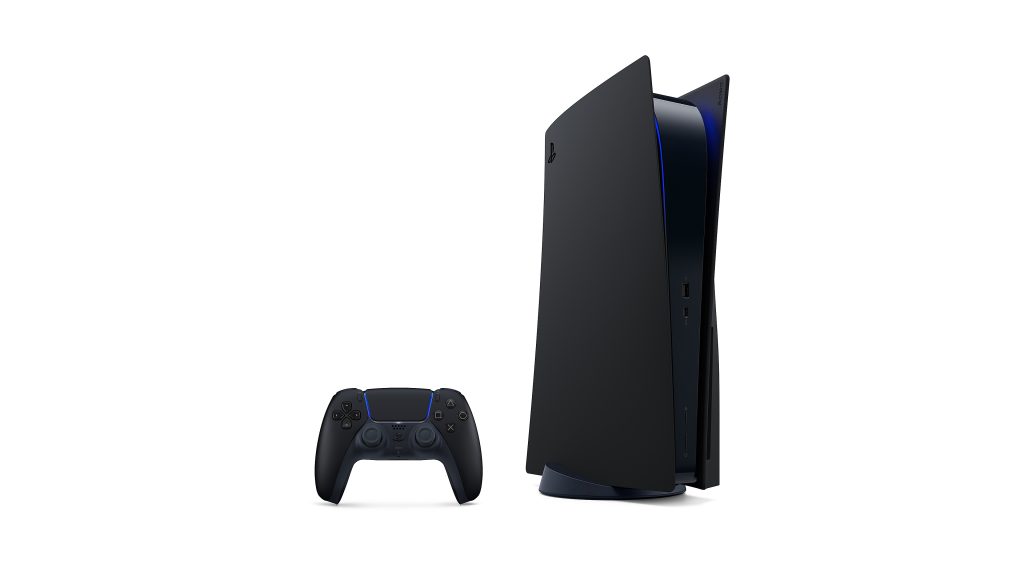
Separate from the sales argument, the disc news itself is real. In a PlayStation Blog post on July 1, 2026, Sony said: “physical game disc production for all new games releasing on PlayStation consoles will be discontinued starting January 2028.” That covers first-party and third-party new games alike. Games already on disc before 2028 are unaffected.
Publishers are reportedly still able to re-order discs for pre-2028 games. That comes from a private partner message, so treat it as reported, not as a public promise. As of October 28, 2026, there has been no reversal.
Proven Gamer has covered this cutoff before: Sony Said It AGAIN: No More PS5 Discs After January 2028 — Nintendo Says Never, and I’m All-Digital Since PS3 — Sony Killing Discs Is Fine. THIS Isn’t.
What PSBlackout actually is
PSBlackout, at psblackout.com, describes itself as a grassroots spending pause. It lists five requests: keep meaningful physical releases, keep disc hardware, clearer digital licensing, stronger preservation and compatibility, and durable access to what players have bought.
Its own scale is much smaller than the viral conversation suggests. The site itself shows only 92 direct pledges, while a separate external Change.org petition sits at 387,992. No operator is named on the site. Circana’s Mat Piscatella said the original August blackout showed no significant change in US player count or engagement.
The verdict
Accurate (in narrow context)
- Requiem ~30%, Wolverine ~32%, Pragmata ~44%, and Onimusha ~44% physical on PlayStation — as Alinea estimates, 2026 year-to-date to October 20, 2026 (revenue share for the first two; copies and revenue for the last two).
- Sports titles are overwhelmingly digital (4.6–8.9% physical revenue in the same dataset).
- Sony will discontinue disc production for all new games on PlayStation consoles starting January 2028; pre-2028 disc games are unaffected.
- Audience segmentation is real: prestige single-player, first-party, and Japanese-franchise audiences buy discs at far higher rates than sports and live-service audiences, and rates vary hugely by country (for example, Wolverine at over 66% physical in France versus about 33% in the UK).
Misleading or cherry-picked
- Calling it a “GamesRadar report” covering all four games — GamesRadar’s October 21 article covered Requiem only; the four-game set is Alinea’s newsletter, and a competing Ampere dataset gives different numbers (Wolverine 35% in September; Onimusha 30% in September).
- Presenting revenue shares as “% of PS5 sales” (Requiem, Wolverine), and presenting estimates as reported facts, with no region, period, or denominator.
- Selecting the top physical sellers to imply typicality, while omitting the same source’s headline — physical is well below 20% of new-game premium revenue in 2026 — and Sony’s 78–85% digital platform ratios.
- “Over 40%” for Pragmata and Onimusha understates Alinea’s 44% while ignoring Ampere’s 30% September figure for Onimusha.
False or unverifiable
- False as a generalisation: that 30–40%+ is representative of PS5 overall, or that it proves physical is not shrinking — platform-wide measures put physical at roughly 8–22% depending on scope.
- Unverifiable: who operates psblackout.com; any verified total participation or sales impact for #PSBlackout; any claim the four splits are official — no publisher or platform split has been published by Sony, Capcom, or Insomniac.
What we could not verify
- No official per-game physical/digital splits from Sony, Capcom, or Insomniac.
- Alinea’s methodology has not been published in detail.
- The operator of psblackout.com is unknown.
- There is no verified blackout sales impact.
Sources
- Alinea Analytics newsletter, October 20, 2026
- GamesRadar, Resident Evil Requiem article, October 21, 2026
- PlayStation Blog, July 1, 2026
- The Game Business, September piece, October 8, 2026
- PSBlackout
Follow Proven Gamer: X @ProvenGamer | Facebook | Twitch | YouTube @officialprovengamer | Instagram @officialprovengamer | Threads @officialprovengamer | TikTok @provengamer | Patreon | Discord



More Stories
Racers Unite! — Formula Legends Multiplayer Is LIVE on PS5 and Xbox Series X|S, With Full Crossplay
Assassin’s Creed Valhalla Is Finally Getting New Game+ on November 5 — and Ubisoft Just Put Every Other Remake on Hold
The Friendship-Destroyer Is BACK — Dokapon Kingdom: Connect 2 Announced for Switch, Switch 2 and Steam, Launching Worldwide Summer 2027